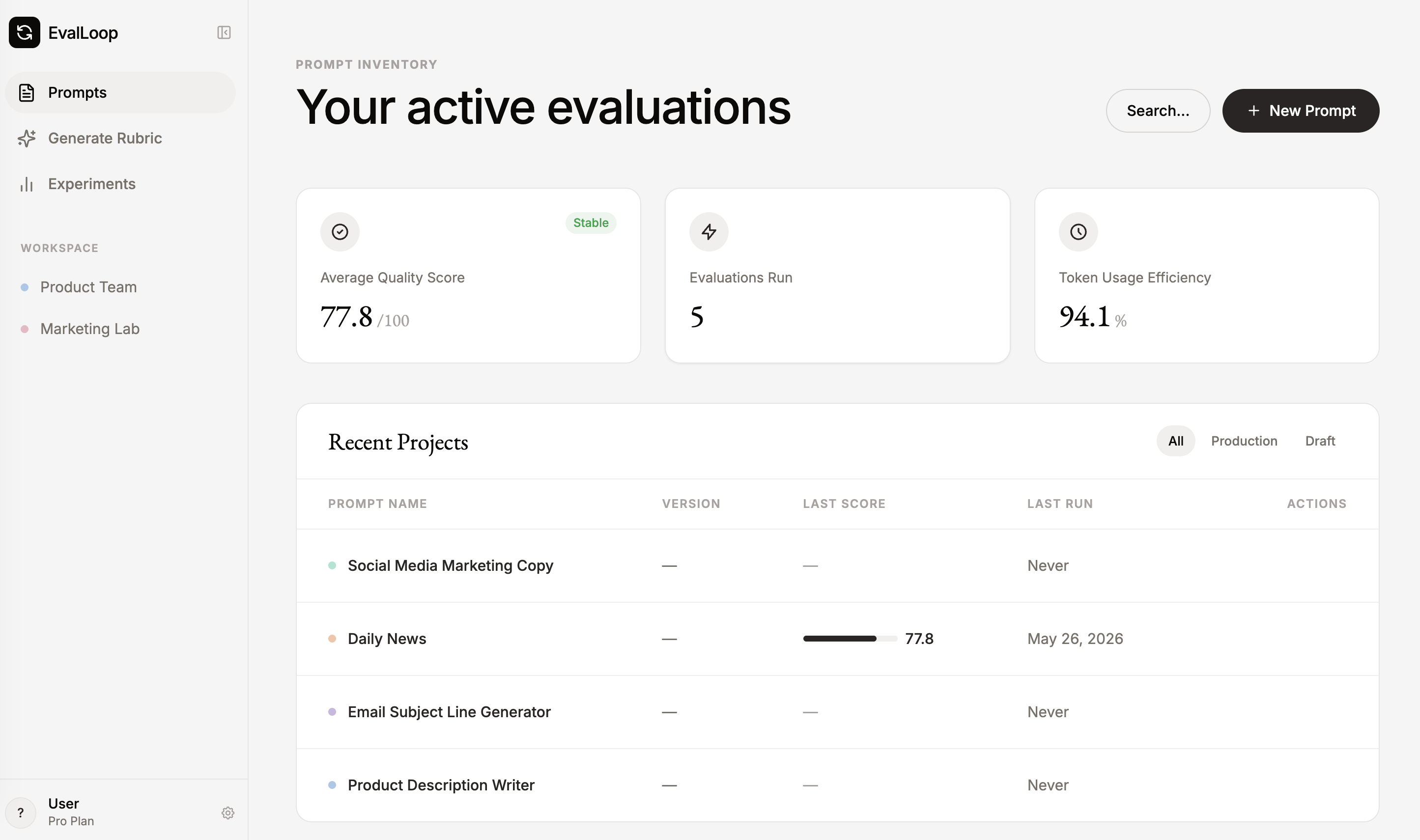
Dashboard — active evaluations
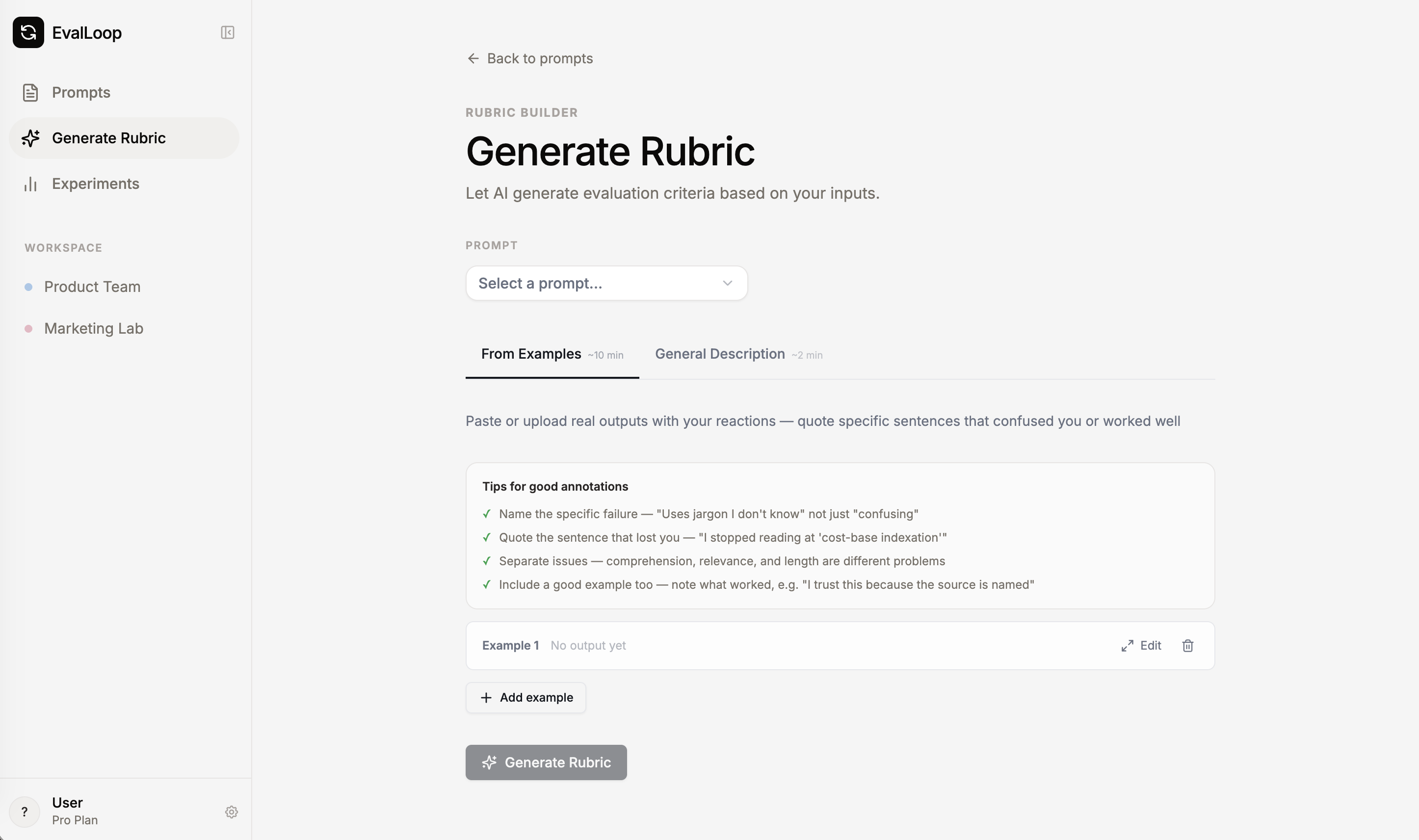
Rubric builder — generate evaluation criteria
Turn prompt writing into a feedback loop: define quality, score outputs, and iterate.
Try it yourself ↗Skills: Prompt engineering · LLM evaluation · Python · Product thinking · Systems design
Dashboard — active evaluations
Rubric builder — generate evaluation criteria
Prompt iteration is often manual and subjective.
Teams generating repeated AI outputs (marketing, content, internal workflows) frequently adjust prompts without knowing whether quality is genuinely improving.
This project explored turning prompt improvement into a measurable, systematic process.
Built an AI evaluation platform that:
1. Reduce setup effort with templates and guided questions
Writing a good rubric from scratch creates friction. The product provides templates for common workflows while allowing users to customise evaluation depth for higher-stakes workflows.
2. Don't reinvent the wheel
Prompt optimisation had strong open-source approaches available. I focused on integrating, testing, and measuring whether those approaches produced meaningful improvements in my use cases.
3. Prove the system before polishing the experience
The core risk was not usability but whether systematic prompt optimisation produced better outcomes. I chose a lightweight interface first and focused on building confidence in the evaluation loop.
Created a repeatable evaluation process across several workflows — replacing ad-hoc prompt tweaking with a systematic method I can reuse and build on, leading to a 5–10 point increase on evaluated prompts.